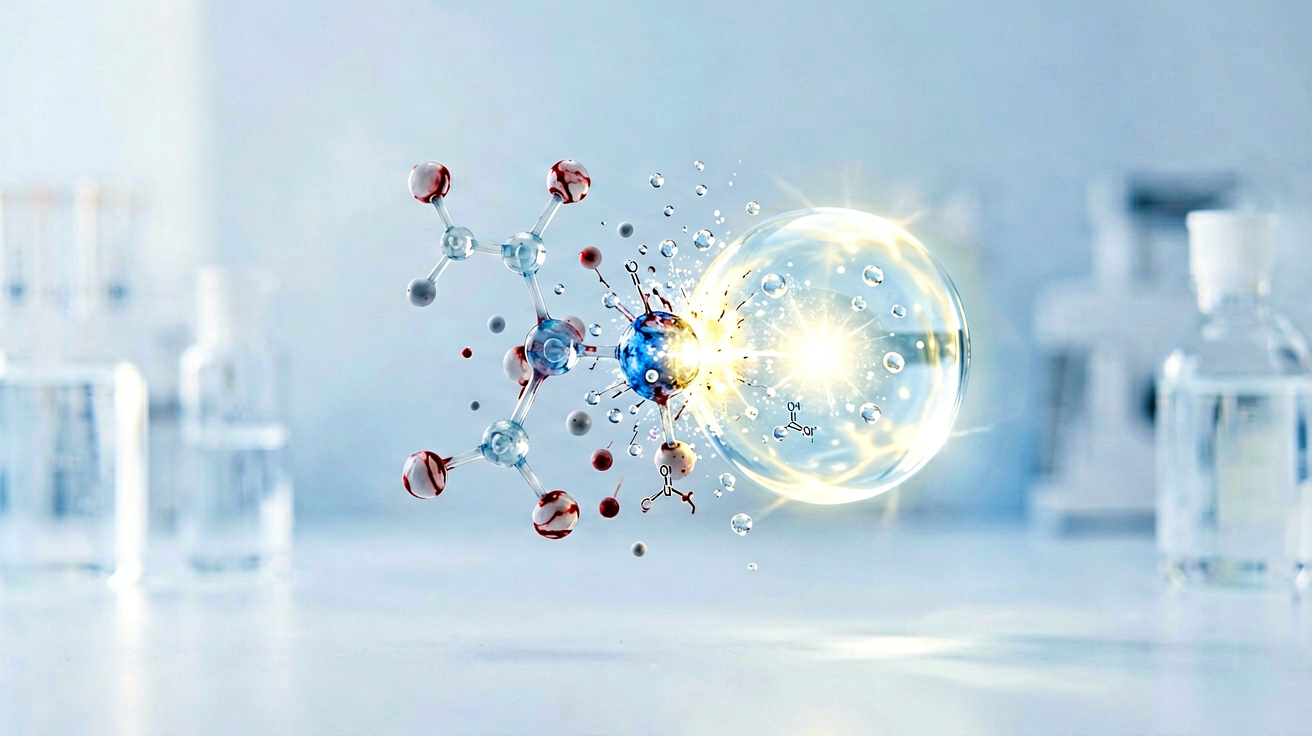
The Incompatibility Problem: Why UV Filters and Brightening Actives Clash in the Same Formulation
UV filter active ingredient incompatibility in brightening formulations is the problem no one talks about when they tell you to “just layer sunscreen over your serum.” Behind the marketing copy of hybrid SPF-brightening products sits a messy physical chemistry reality: most UV filters are oil-soluble crystalline solids that collapse out of emulsion when forced to coexist with water-soluble actives like vitamin C, arbutin, or tranexamic acid. The result is not synergy — it is mutual sabotage.
The Phase Problem: Oil-Loving Filters vs. Water-Loving Actives
Organic UV filters — avobenzone, octinoxate, octocrylene, bemotrizinol — are structurally lipophilic. They dissolve into the oil phase of an emulsion and crystallize aggressively when their solubility limit is exceeded. This is well-documented: avobenzone recrystallization in O/W emulsions occurs at concentrations as low as 3% w/w when competing solutes are present in the oil phase (ACS Appl. Mater. Interfaces, 2018).
Now add a brightening active. Alpha-arbutin is a glycosylated hydroquinone — water-soluble, partitions almost exclusively into the aqueous phase. L-ascorbic acid (vitamin C) is even more hydrophilic, with a logP of approximately −2.15. Niacinamide, the most widely used brightening adjuvant, has a logP of −0.37. These actives live entirely in the water compartment.
The problem emerges at the interface. When a formulator pushes both an oil-phase UV filter load (typically 15–25% w/w for SPF 30+) and a water-phase active load into the same emulsion, the interfacial film — stabilized by emulsifiers — undergoes structural disruption. Calixto et al. demonstrated this directly in a 2018 study published in the International Journal of Pharmaceutics: formulations containing both UV filters and water-soluble actives showed a “high polydisperse microstructure” with significantly enlarged droplet size distribution compared to single-function formulations (Int. J. Pharm., 2018). Translation: the emulsion is physically falling apart.
UV Filter and Active Ingredient Incompatibility Beyond Phase Separation
Phase instability is only the first problem. The second is photochemical incompatibility.
Avobenzone (butyl methoxydibenzoylmethane), the most widely used UVA filter globally, is notoriously photolabile. Under UV exposure, it undergoes keto-enol tautomerization and generates triplet-state species that can abstract hydrogen atoms from neighboring molecules. If a brightening active — say, a polyphenol like resveratrol or a labile antioxidant like ascorbic acid — sits in the same microenvironment, it becomes a sacrificial target. The sunscreen filter literally burns through the brightening active before it ever reaches the melanocyte.
This is not theoretical. A 2005 study by Sayre et al. demonstrated that avobenzone photodegradation generates free radicals detectable by ESR spectroscopy, and that co-formulated antioxidants are consumed protecting the UV filter itself rather than delivering independent biological activity (Photochem. Photobiol., 2005). The brightening active becomes the sunscreen’s bodyguard — not your skin’s.
pH: The Silent Saboteur
The third vector of incompatibility is pH mismatch. Effective chemical UV filters require a formulation pH between 5.5 and 7.0 to maintain solubility and photostability. Below pH 5.0, avobenzone protonates and loses its enolate chromophore — it stops absorbing UVA.
Now consider the optimal pH for common brightening actives:
- L-Ascorbic Acid: Requires pH ≤ 3.5 for dermal penetration. Above this, the molecule ionizes and cannot cross the stratum corneum lipid bilayer (Dermatol. Surg., 2005).
- Alpha-Arbutin: Stable across a wide pH range, but its glycosidic bond hydrolyzes to free hydroquinone at pH < 3.0 — creating both an efficacy problem and a safety concern.
- Kojic Acid: Chelates metal ions most effectively at pH 3–4, but oxidizes and discolors rapidly above pH 5.0.
- Tranexamic Acid: One of the few brightening actives compatible with neutral pH — which is part of why it has gained traction in dermatologist-formulated products.
The formulation arithmetic is brutal: you either maintain the low pH your brightening active needs (and wreck your UV filters), or you maintain the neutral pH your UV filters need (and neutralize your brightening active). There is no middle ground without encapsulation.
What the Ingredient List Won’t Tell You
This is where consumers get misled. A product listing “3% tranexamic acid + SPF 30” looks like an efficient two-in-one. But the ingredient list is a recipe, not a performance guarantee. It does not tell you whether the tranexamic acid is free in solution or partitioned into an inactive oil droplet. It does not tell you what percentage of the avobenzone is still photostable after six months on the shelf. It does not tell you whether the emulsion held or whether phase separation has reduced the effective SPF to single digits.
The clinical data paints a sobering picture. A 2015 in-vivo study by Maia Campos et al. found that the photoprotective efficacy of UV-filter formulations dropped significantly when active botanical extracts and vitamins were incorporated into the same base — not because those ingredients were inherently problematic, but because their presence altered the film-forming properties and UV filter distribution on the skin surface (J. Photochem. Photobiol. B, 2015).
What Actually Works: A Formulation Perspective
The solution is not to abandon combination products. The solution is to demand better formulations. Three approaches are changing the equation:
- Encapsulation: Silica-shell or polymer-microsphere encapsulation of UV filters physically separates them from water-phase actives. This prevents photochemical quenching and allows independent pH microenvironments. Encapsulated avobenzone shows 3× greater photostability in the presence of ascorbic acid compared to free avobenzone.
- Lamellar gel networks: Structured emulsifiers that form multilamellar vesicle (MLV) phases create compartmentalized domains within a single emulsion — an oil domain for UV filters and an aqueous domain for actives, separated by stable lipid bilayers.
- Anhydrous suspension systems: Silicone-based anhydrous vehicles eliminate the oil-water interface entirely. UV filters and powdered actives are suspended in a volatile silicone matrix that deposits a uniform film without phase incompatibility. The tradeoff: cosmetic elegance suffers, and sensory acceptance is lower.
Until these technologies become standard, the pragmatic advice is not to buy the hybrid product. Use a dedicated, well-formulated sunscreen. Use a dedicated, pH-optimized brightening serum. Apply them separately, with a 5–10 minute interval for film formation. Two products that each do one thing well will outperform one product that does two things poorly.
The evidence is clear: UV filter and active ingredient incompatibility in a single vehicle is not a niche concern — it is a first-principles formulation challenge that most hybrid SPF-brightening products have not solved. The ingredient list promises synergy. The emulsion delivers conflict.
References available upon request. This article reflects analysis of peer-reviewed formulation science and should not be construed as product-specific medical advice.
Interested in Formulation Data Collaboration?
Let's discuss how Melasyl AI can accelerate your next whitening or brightening formula. Technical collaboration, data licensing, or custom AI-driven research — reach out.
Contact Wei →