Why Most Brightening Serums Don’t Work: A Formulation Perspective
If you’ve ever wondered why most brightening serums don’t work despite their hefty price tags and glowing influencer reviews, the answer isn’t in the marketing — it’s in the formulation. The gap between what a brightening serum promises and what it actually delivers is rarely about the quality of the active ingredient printed on the box. It’s about whether that ingredient can stay stable, penetrate the skin, and act on the right biological target before your body metabolizes it into irrelevance. And in most commercial formulations, the answer is no.
The Melanogenesis Problem Nobody Talks About
To understand why most brightening products fail, you first need to understand melanogenesis — the multi-step biological cascade that produces melanin in your skin. It’s not a single switch you can flip off with one molecule. It’s a network of interdependent events:
- UV/oxidative signaling triggers keratinocytes to release α-MSH and endothelin-1
- MC1R receptor activation on melanocytes upregulates MITF (microphthalmia-associated transcription factor)
- MITF drives transcription of tyrosinase, TRP-1, and TRP-2
- Tyrosinase catalyzes the rate-limiting oxidation of tyrosine to DOPA and DOPA to dopaquinone
- Melanosome maturation and transfer shuttles melanin granules into surrounding keratinocytes
That’s at least five distinct intervention points. Yet the vast majority of brightening serums on the market target only one: tyrosinase inhibition. They’re bringing a single key to a door with five locks — and then wondering why it doesn’t open.
Why Most Brightening Serums Don’t Work at the Formulation Level
The single-active, single-pathway approach is only the beginning of the problem. Even when a serum contains a theoretically effective tyrosinase inhibitor, three formulation-level failures almost guarantee underwhelming results.
1. Penetration: The Stratum Corneum Is a Fortress
Your skin’s outermost layer, the stratum corneum, exists precisely to keep things out. It’s a 10–20 μm barrier of corneocytes embedded in a lipid matrix, and it doesn’t care about the 2% kojic acid listed on your serum’s ingredient panel. Most brightening actives — arbutin, kojic acid, ascorbic acid, tranexamic acid — are hydrophilic molecules with molecular weights between 150–500 Da. Without a penetration-enhancing delivery system, their transdermal flux is negligible.
Research on ex vivo human skin models demonstrates that unformulated kojic acid achieves less than 2% percutaneous absorption over 24 hours. Arbutin fares slightly better due to its glucoside moiety but still struggles to reach the basal layer where melanocytes reside. The result: the active sits on your skin surface, oxidizes, and gets wiped off on your pillow — never having reached a single melanocyte.
If your formulation can’t deliver the active to the basal epidermis, the active concentration in the bottle is irrelevant. Penetration is not a bonus — it’s a prerequisite.
2. pH Stability: Actives Self-Destruct in the Bottle
Many brightening ingredients have narrow pH stability windows that are fundamentally incompatible with each other — or with the pH range of human skin (4.5–5.5).
L-ascorbic acid (vitamin C) requires a pH below 3.5 to remain protonated and permeable. At pH 5.5 — comfortable skin pH — it ionizes and loses both penetration capacity and stability, oxidizing to dehydroascorbic acid within days. Alpha-arbutin is stable between pH 3.5–6.5 but hydrolyzes to hydroquinone at pH below 3.0 — which is exactly the pH range required for effective vitamin C. Niacinamide converts to niacin (causing the infamous “niacin flush”) at pH below 4.5.
When a serum claims to contain vitamin C, niacinamide, and arbutin in one bottle, the formulation chemist had to make trade-offs. The pH was likely buffered to a compromise value — say, 5.0 — where vitamin C is deprotonated, niacinamide is barely stable, and arbutin has lost significant activity. The consumer sees a dream ingredient list; the chemist sees three actives neutralizing each other.
A multi-active serum at a single pH is not synergy. It’s a hostage negotiation between incompatible ingredients.
3. Oxidation and Photodegradation: The Race Against Time
Even if a brightening active survives the pH compromise and manages to penetrate, it still has to survive long enough to reach its target. Many of the most potent tyrosinase inhibitors are also potent reducing agents — which means they oxidize rapidly upon exposure to air, light, and water.
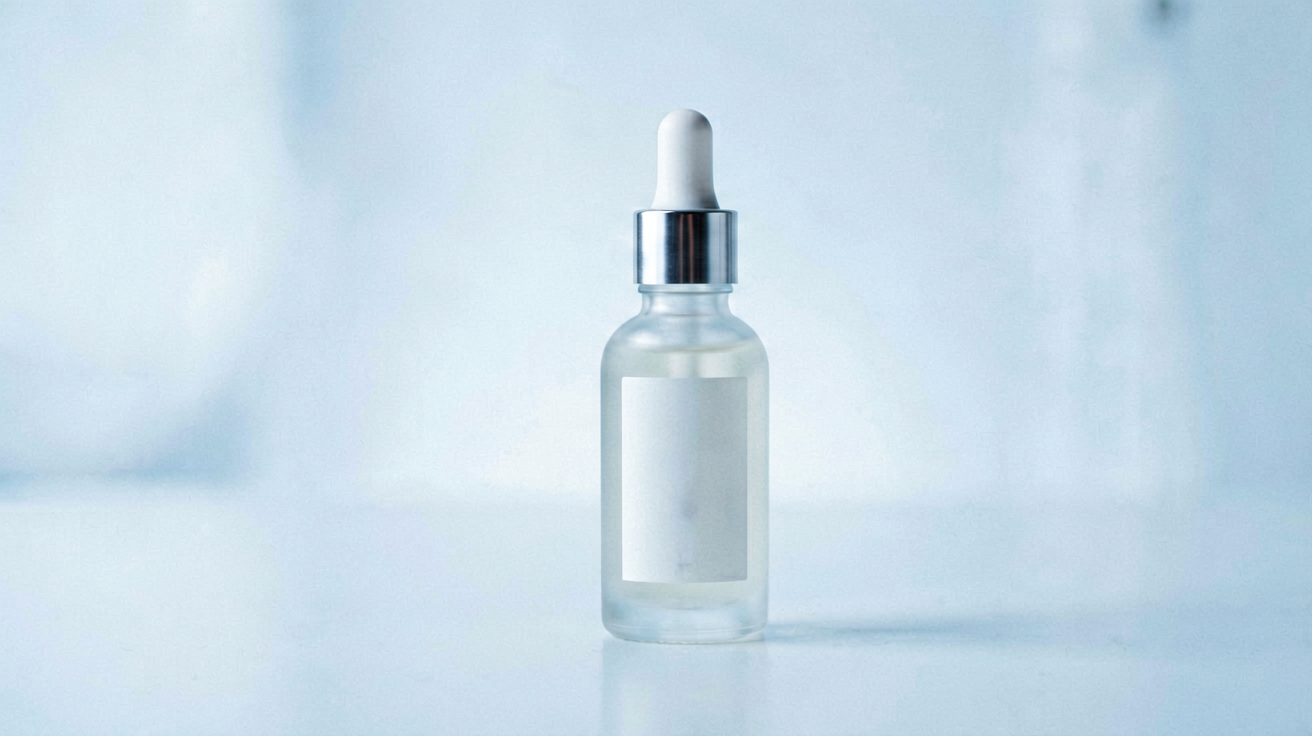
A 2019 stability study published in the Journal of Cosmetic Dermatology found that 15% L-ascorbic acid serums stored in clear glass bottles lost over 40% of active content within 14 days at room temperature under ambient light. Kojic acid undergoes photodegradation under UV exposure, forming brown-colored oxidation products that not only lose efficacy but can act as pro-oxidants. Resveratrol isomerizes from the active trans form to the inactive cis form under UVA within hours. Glabridin, the potent tyrosinase inhibitor from licorice root, is notoriously photosensitive — yet it’s routinely packaged in dropper bottles that expose the entire formula to oxygen with every use.
Every time you unscrew that dropper, you’re introducing 21% oxygen to your serum. Over 30 days, that’s 60 exposures. Most actives don’t survive that gauntlet.
What a Formulation That Actually Works Looks Like
If you want a brightening serum that delivers, you need to stop reading ingredient lists and start evaluating formulation architecture. Here’s the checklist:
- Multi-pathway targeting: At minimum, the formula should address tyrosinase inhibition, melanosome transfer suppression (e.g., niacinamide at 4–5%), and antioxidant protection against UV-induced signaling. Three points of intervention, not one.
- Penetration system: Look for liposomal encapsulation, ethosomes, or penetration enhancers like dimethyl isosorbide or ethoxydiglycol. If the formula doesn’t describe how the active gets in, assume it doesn’t.
- Airless packaging: If it comes in a dropper bottle or a clear jar, walk away. Airless pumps and opaque packaging aren’t premium features — they’re functional necessities for oxidation-prone actives.
- pH transparency: A brand that understands formulation chemistry will usually state or imply the formula’s pH. If the product contains both L-ascorbic acid and niacinamide without a dual-chamber delivery system, the formulator didn’t do the math.
- Stabilized derivatives: Ascorbyl glucoside, 3-O-ethyl ascorbic acid, and tetrahexyldecyl ascorbate are vitamin C derivatives with superior stability profiles. They may convert less efficiently in vivo, but at least they reach the target intact — which is more than can be said for oxidized L-AA.
The Bottom Line
The brightening serum market is dominated by ingredient-led marketing and formulation-led failure. Consumers buy actives; skin responds to formulations. If your serum targets one pathway, can’t penetrate the stratum corneum, self-destructs at its own pH, and oxidizes in the bottle — then it doesn’t matter if it contains the world’s most potent tyrosinase inhibitor. It was never going to work.
The good news is that formulation science has solved all of these problems. Multi-lamellar delivery systems, stabilized derivatives, dual-phase emulsions, and rigorous stability protocols exist. They’re just more expensive to develop than a simple aqueous serum in a dropper bottle — and most brands choose the cheaper path, betting you won’t know the difference. Now you do.
Interested in Formulation Data Collaboration?
Let's discuss how Melasyl AI can accelerate your next whitening or brightening formula. Technical collaboration, data licensing, or custom AI-driven research — reach out.
Contact Wei →